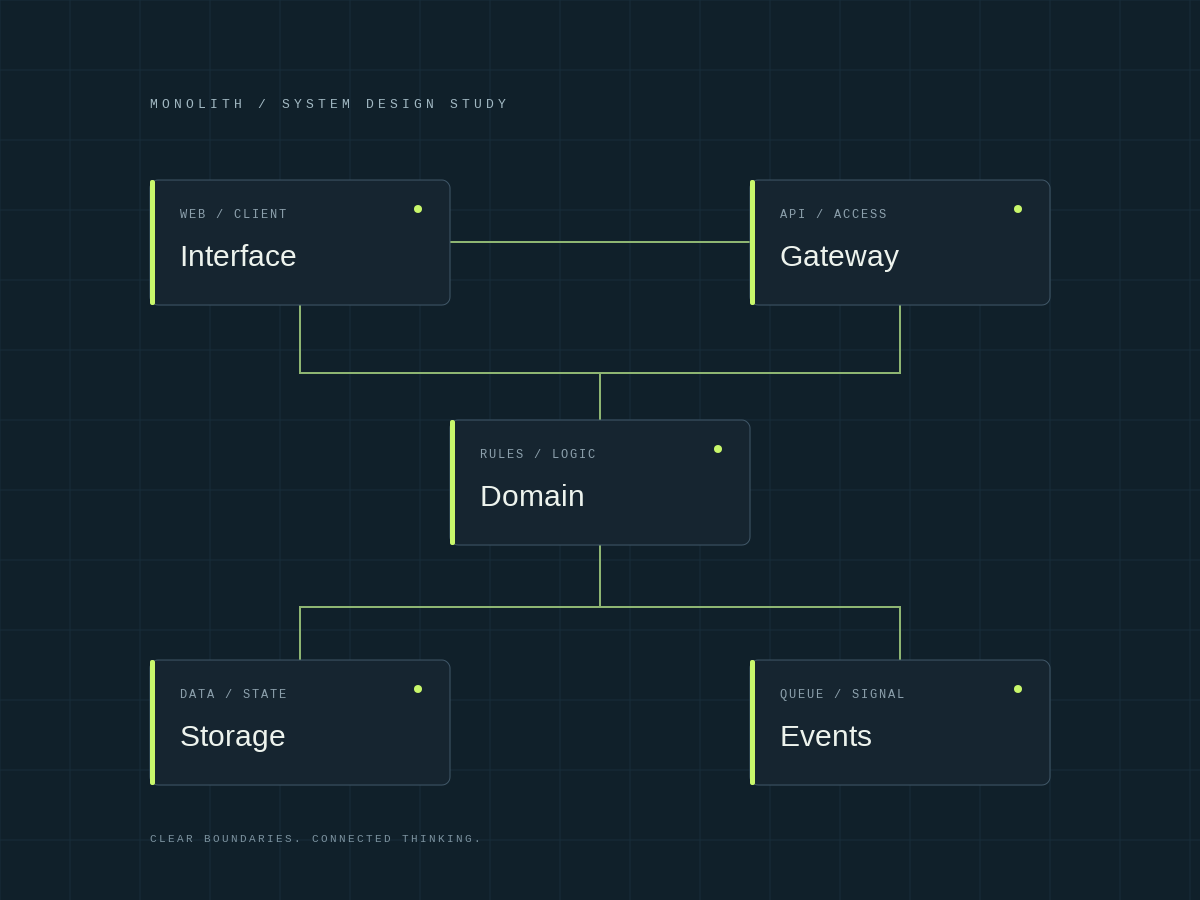
A system becomes easier to understand when its responsibilities have a clear home.
A diagram is a conversation
The first value of an architecture diagram is not precision. It is the questions it makes visible. Where does a business rule belong? Who owns a piece of data? What should happen when a dependency is unavailable? A small, shared model helps people discuss the same system.
Name the responsibility
A component name should explain why it exists. A domain layer protects the rules of the product. An interface presents an experience. Storage preserves state. These descriptions are more useful at the start than choosing a tool for every box.
Follow a single request
Choose one important action and trace it through the model. Notice where information changes shape, where a decision is made and where failure needs to be handled. A concrete flow often exposes missing responsibilities more clearly than adding more boxes.
Keep the trade-offs visible
Every boundary has a cost. More separation can introduce coordination, more interfaces and more failure modes. The aim is not the most elaborate diagram. It is a structure that fits the current problem and leaves understandable options for change.
Document what is still uncertain
A good design note includes assumptions and unanswered questions. It should help the next person understand the intent, including the parts that may need revision. Architecture stays useful when it remains connected to the work.